How an Experiment Record System Protects Data Integrity and Speeds Lab Workflows
Why Labs Are Moving Beyond Paper for Experiment Records
For decades, scientists documented experiments in bound paper notebooks—writing protocols by hand, taping in printouts, and hoping nothing got spilled on. That approach worked when teams were small and studies were simple. Today's laboratories run dozens of parallel experiments, collaborate across time zones, and face regulatory scrutiny that demands traceable, searchable, and tamper-evident records. A modern experiment record system replaces fragile paper workflows with structured digital tools designed for the way research actually happens.
Whether you call it an Electronic Lab Notebook (ELN), a Laboratory Information Management System (LIMS), or a unified R&D platform, the core idea is the same: capture every step of an experiment—from design to execution to analysis—in a single, searchable, and shareable digital environment. This article breaks down what an experiment record system needs to do, how it supports compliance, and what to look for when choosing one.
Core Capabilities an Experiment Record System Must Deliver
Not every digital notebook qualifies as a full experiment record system. A platform worth adopting needs to cover at least five functional areas:
- Structured documentation. Predefined templates for protocols, observations, and results ensure consistency across experiments and team members. Instead of free-form pages, researchers fill in structured fields that make data comparable and searchable.
- Version control and audit trails. Every edit is logged with a timestamp, the identity of the person who made the change, and the reason. This creates a complete history that can be reviewed during audits without digging through email threads or file duplicates.
- Instrument and data integration. The system should connect to lab instruments—spectrophotometers, chromatographs, sequencers—so that raw data flows in automatically. Manual transcription is slow and error-prone; direct integration eliminates that bottleneck.
- Collaboration and access control. Teams need to share experiments in real time, annotate each other's work, and reference shared libraries of reagents, plasmids, or SOPs. At the same time, sensitive projects require fine-grained permissions so that only authorized personnel can view or edit specific records.
- Search and retrieval. A well-designed experiment record system indexes every entry—text, tables, images, attached files—and makes it retrievable by keyword, date range, project, or researcher. Finding a protocol from three years ago should take seconds, not hours.
Platforms that combine these capabilities in one workspace reduce the number of disconnected tools a team has to manage. Instead of juggling a standalone notebook app, a file-sharing service, and a sample tracker separately, researchers work within a single system that connects all three.
How Experiment Record Systems Support Regulatory Compliance
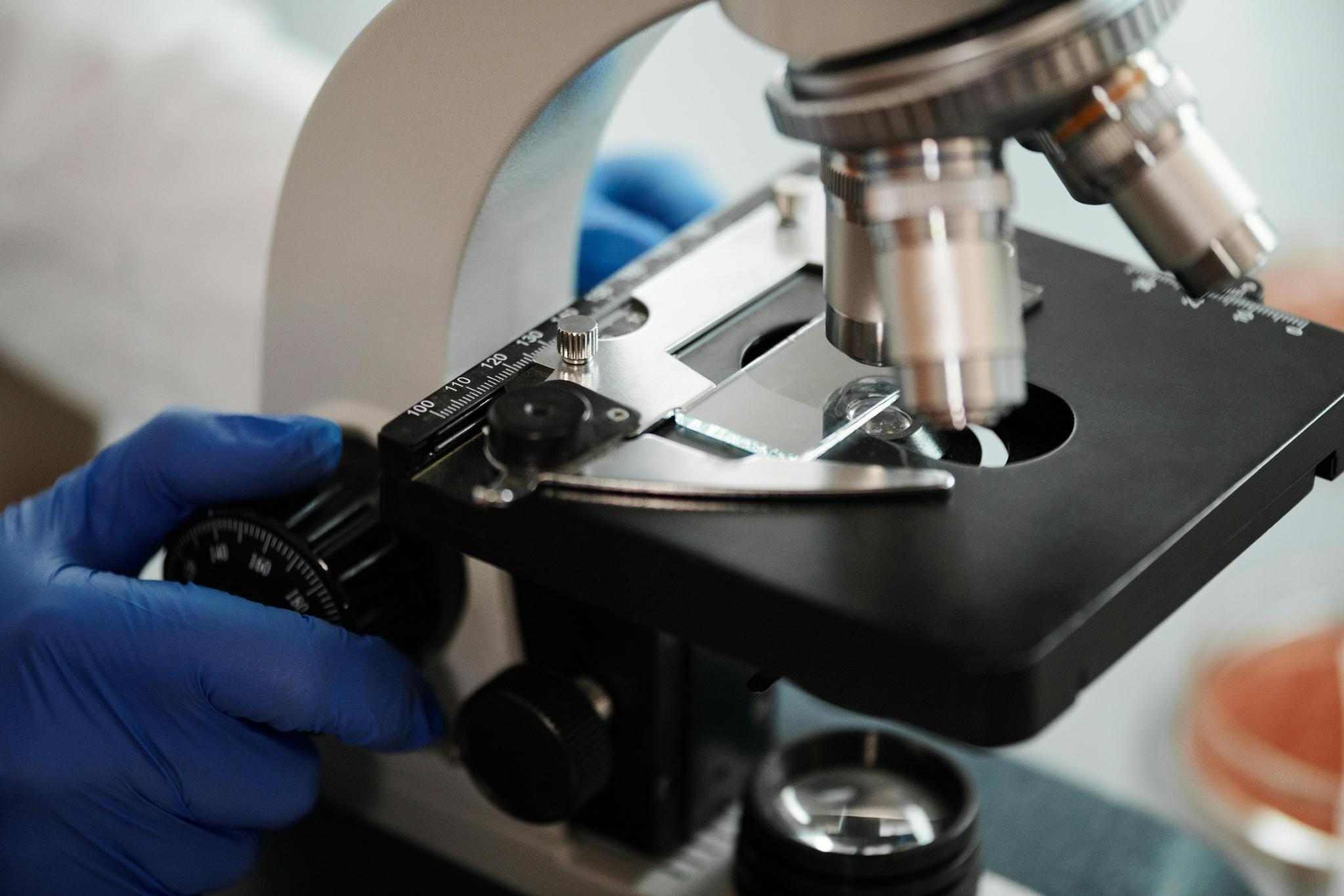
Laboratories operating under Good Laboratory Practice (GLP) or FDA-regulated environments face strict requirements for how experimental data is captured, stored, and protected. A compliant experiment record system addresses these requirements at multiple levels:
GLP Requirements
GLP mandates that every experimental step is documented clearly, that data is attributable to the individual who recorded it, and that all raw data is preserved for potential review. An experiment record system enforces this by requiring user authentication for every entry, time-stamping every action, and locking completed records against unauthorized modification.
FDA 21 CFR Part 11
This regulation governs electronic records and electronic signatures in FDA-regulated industries. To comply, an experiment record system must provide:
- Validated systems that have been tested to ensure accuracy, reliability, and the ability to detect altered records.
- Secure, computer-generated audit trails that independently record the original value, the new value, the user, the timestamp, and the reason for every change.
- Electronic signatures that are unique to each individual and verified through authentication mechanisms such as passwords combined with biometric or token-based factors.
- Role-based access control to restrict who can create, modify, approve, or archive records.
ALCOA+ Data Integrity
The FDA's ALCOA+ framework—Attributable, Legible, Contemporaneous, Original, Accurate, plus Complete, Consistent, Enduring, and Available—provides a practical checklist for evaluating whether an experiment record system produces trustworthy data. A system that automatically timestamps entries, prevents backdating, maintains original files alongside any annotations, and encrypts data at rest and in transit goes a long way toward meeting these principles.
Record retention is another compliance concern. GLP studies typically require documentation to be retained for two years from FDA approval or five years from study submission, depending on the jurisdiction. Cloud-based experiment record systems handle this by maintaining redundant, backed-up storage with configurable retention policies.
Choosing Between ELN, LIMS, and Unified Platforms
The experiment record system landscape includes two historically separate categories that are increasingly converging:
| Feature | ELN | LIMS | Unified Platform |
|---|---|---|---|
| Primary focus | Experiment documentation, protocols, observations | Sample tracking, workflow automation, test management | Both, plus molecular tools, file management, collaboration |
| Typical users | Research scientists, PIs | Lab managers, QA teams | Entire R&D organization |
| Collaboration | Real-time co-editing, annotations | Workflow routing, status dashboards | Full project file trees, shared libraries, cross-references |
| Compliance | FDA 21 CFR Part 11, audit trails | GLP, GMP, ISO standards | Comprehensive: GLP + Part 11 + ALCOA+ |
| Instrument integration | Moderate—file attachments, some direct capture | Strong—automated data capture from instruments | Strong—direct integration plus data visualization |
For a small academic lab running a handful of projects, a lightweight ELN may be sufficient. For a biotech company managing vector engineering pipelines, CRISPR design workflows, and multi-site collaborations, a unified platform that combines ELN, LIMS, and specialized molecular biology tools delivers more value—and eliminates the integration headaches that come from stitching together three or four separate applications. Platforms like Zettalab take this further by integrating a GLP-ready electronic lab notebook (ZettaNote) with sequence editing tools (ZettaGene), CRISPR design (ZettaCRISPR), and team file management in a single cloud workspace—connecting experiment design, execution, and documentation without the need to switch between disconnected applications.
Cloud vs. On-Premise Deployment: What to Consider
Deployment model affects accessibility, security, and IT overhead. Cloud-hosted experiment record systems offer immediate access from any device with an internet connection, automatic updates, and built-in disaster recovery. They are particularly advantageous for distributed teams that need to collaborate across locations.
On-premise deployments give organizations full control over their infrastructure and data residency, which may be required by institutional policies or local regulations in certain jurisdictions. However, they shift the burden of maintenance, backups, security patching, and scaling onto internal IT teams.
Some platforms offer both options, along with hybrid configurations that keep sensitive data on-premise while leveraging cloud infrastructure for collaboration and compute-intensive tasks. When evaluating deployment models, consider where your team members are located, what data residency rules apply to your industry, and whether your IT team has the capacity to maintain infrastructure.
Practical Steps for Implementing an Experiment Record System
Rolling out a new experiment record system across a lab or organization is a change management exercise, not just a software deployment. Here are the steps that consistently lead to successful adoption:
- Map existing workflows. Document how experiments are currently recorded—from notebook entries to spreadsheet tracking to instrument output files. Identify the pain points: duplicated effort, missing data, compliance gaps, or collaboration bottlenecks.
- Define requirements by role. A PI needs portfolio-level visibility and IP protection. A bench scientist needs fast data entry and instrument integration. A QA manager needs audit trails and export capabilities. A bioinformatics lead needs API access and data interoperability. Collect all of these perspectives before evaluating vendors.
- Pilot with one project team. Start with a team that has a well-defined workflow and is motivated to improve it. Use the pilot to test templates, integrations, and permission structures. Document what works and what needs adjustment.
- Migrate incrementally. Do not try to import every historical record at once. Begin with active projects, and archive older paper notebooks in parallel. Most teams find that digital records for new experiments immediately demonstrate value, which builds momentum for broader adoption.
- Train and iterate. Provide hands-on training sessions tailored to each role. Collect feedback weekly during the first month, and adjust templates and workflows based on what users actually need—not what administrators assume they need.
The Cost of Not Having a Proper Experiment Record System
Labs that rely on paper notebooks and shared spreadsheets pay hidden costs that compound over time. A lost notebook can mean months of irreproducible work. A regulatory audit that cannot produce complete records can delay product approvals. A scientist who leaves the organization takes institutional knowledge that was never captured in a searchable system.
According to industry surveys, researchers spend an estimated 20-30% of their time on documentation-related tasks—searching for information, re-entering data, preparing reports from scattered sources. An experiment record system that centralizes documentation, automates data capture, and makes everything searchable can reclaim a significant portion of that time, freeing researchers to focus on the science itself.
The reproducibility crisis in life sciences further underscores the need for better record-keeping. When experiments cannot be replicated because protocols were incompletely documented, the entire research enterprise loses credibility. A structured experiment record system, with templates that prompt researchers to capture critical parameters, directly addresses this problem.
Making the Transition Work
The best experiment record system is the one your team actually uses. Feature checklists matter, but adoption matters more. Choose a platform that matches your team's workflow complexity—neither so simple that it cannot handle your compliance requirements, nor so complex that researchers resist using it. Start small, iterate fast, and let the value of searchable, structured, compliant experiment records drive the transition organically.
相关文章