Molecular Biology Data Analysis in 2026: From NGS Pipelines to AI-Driven Discovery
Why Molecular Biology Data Analysis Matters More Than Ever
The volume of biological data generated today dwarfs what labs handled even a decade ago. A single next-generation sequencing (NGS) run can produce terabytes of raw reads, and projects spanning genomics, transcriptomics, and proteomics demand computational workflows that turn that raw signal into biological insight. Molecular biology data analysis sits at the center of this transformation: it is the discipline of extracting, cleaning, interpreting, and visualizing biological datasets so researchers can make decisions—about drug targets, disease mechanisms, or gene function—with evidence rather than intuition.
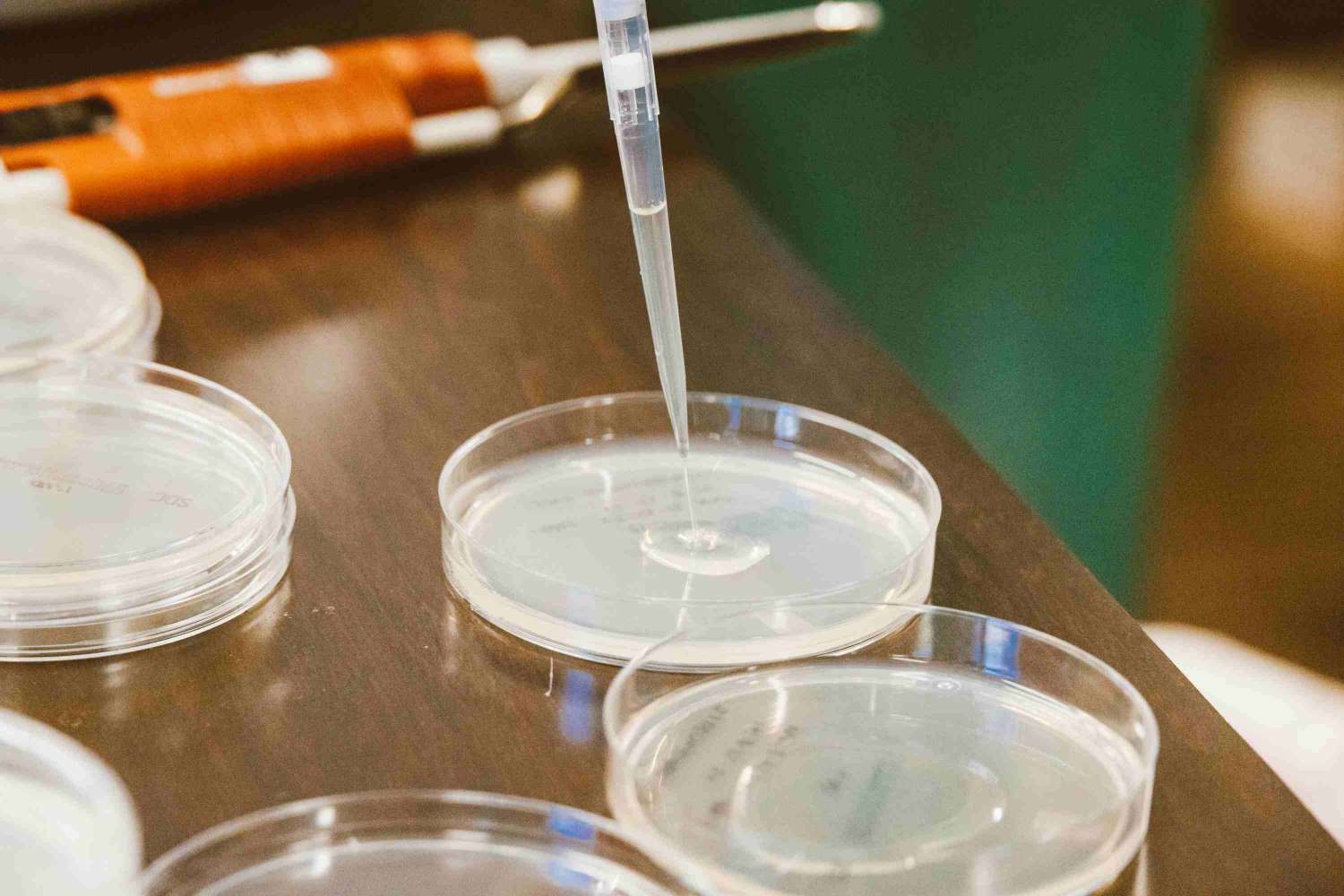
In 2026, the field is defined by three converging forces: artificial intelligence moving from experimental to essential, multi-omics integration becoming routine, and the rise of single-cell and spatial technologies that add resolution and complexity in equal measure. Whether you are a bench scientist learning your first pipeline or a bioinformatics engineer scaling analyses across a pharma portfolio, understanding the current landscape of tools and methods is no longer optional.
The Core Workflow: From Raw Sequences to Biological Meaning
Most molecular biology data analysis projects follow a general pattern, even though the specifics vary by assay type. Raw instrument output—fastq files from an Illumina sequencer, count matrices from a single-cell run, or mzML files from a mass spectrometer—enters a pipeline that typically includes quality control, alignment or mapping, quantification, statistical testing, and biological interpretation.
For NGS data, this means running tools like FastQC for quality checks, aligning reads to a reference genome with BWA or STAR, calling variants with GATK (the Genome Analysis Toolkit), and annotating results with databases like Ensembl or UniProt. Gene expression studies add a differential expression step, commonly handled by DESeq2 in R, followed by pathway enrichment analysis using DAVID or Gene Ontology tools.
The key principle is reproducibility. Workflow engines like Nextflow and Snakemake allow teams to codify every step—from read trimming to final plots—into version-controlled pipelines that produce identical results on any compute infrastructure. This is especially critical in regulated environments where audit trails matter.
AI and Machine Learning Are Reshaping the Analysis Landscape
Artificial intelligence has moved beyond hype into practical, measurable improvements in molecular biology data analysis. One of the clearest examples is Google's DeepVariant, which uses a deep neural network to call genetic variants from sequencing data. Published benchmarks show it outperforms many traditional statistical callers in precision, particularly in difficult genomic regions.
Foundation models—the same architecture class behind large language models—are now being adapted for biology. These models can learn representations of genes, proteins, and cells from massive unlabeled datasets, then be fine-tuned for tasks like cross-species cell type annotation, gene regulatory network inference, and protein structure prediction. AlphaFold2 and AlphaFold3 have already demonstrated how AI can predict three-dimensional protein structures with near-experimental accuracy, accelerating drug design and viral evolution studies.
For day-to-day analysis, AI-assisted coding tools like GitHub Copilot are being integrated into bioinformatics workflows, helping researchers write and debug R and Python code for tasks such as RNA-seq expression analysis. This does not replace domain expertise, but it lowers the barrier for scientists who are not primarily software engineers.
Single-Cell and Spatial Technologies: Higher Resolution, Higher Complexity
Single-cell RNA sequencing (scRNA-seq) has become one of the most impactful technologies in molecular biology. By profiling gene expression in individual cells rather than bulk tissue, scRNA-seq reveals cellular heterogeneity, developmental trajectories, and disease mechanisms that averaged measurements miss. The analytical toolkit is mature: Seurat (R) and Scanpy (Python) cover preprocessing, dimensionality reduction, clustering, and visualization for large-scale datasets.
Spatial transcriptomics adds another dimension by preserving the physical location of RNA molecules within tissue sections. Analysis involves preprocessing with platform-specific pipelines like Space Ranger, followed by quality control, normalization, spatial clustering with methods like BayesSpace or SpaGCN, and cell-type deconvolution using reference scRNA-seq data through tools like cell2location or Tangram. The result is a map connecting molecular changes to tissue architecture—critical for understanding tumor microenvironments and organ development.
The computational cost is real. A single spatial transcriptomics experiment can generate millions of data points, requiring cloud-based compute or high-performance clusters. Platforms like DNAnexus, Seven Bridges, and Illumina's BaseSpace Sequence Hub provide managed infrastructure for running these analyses at scale.
Multi-Omics Integration: Connecting the Layers
No single omics layer tells the whole story. Genomics reveals DNA-level variation, transcriptomics captures RNA expression, proteomics quantifies the actual proteins, and metabolomics measures downstream metabolites. Multi-omics integration combines these layers to provide a comprehensive view of biological systems.
In practice, integration is challenging because each data type has different scales, noise profiles, and missingness patterns. Common strategies include concatenation-based approaches (merging features before modeling), similarity-based methods (comparing sample-level networks across omics), and graph-based frameworks that model relationships between molecular layers. Tools like MOFA+ and mixOmics in R are widely used for multi-omics factor analysis and variable selection.
The pharmaceutical industry has been a major driver. Companies seeking comprehensive cellular portraits for drug discovery increasingly require integrated omics pipelines that can connect a genetic variant to an expression change to a protein modification to a clinical outcome. The analytical infrastructure—storage, compute, standardized pipelines, and expert annotation—is as important as the sequencing technology itself.
Choosing the Right Tools for Your Analysis Pipeline
The table below summarizes key categories and representative tools that molecular biology teams rely on in 2026:
| Category | Representative Tools | Primary Use |
|---|---|---|
| Sequence Alignment | BLAST, BWA, STAR | Comparing and mapping sequences to references |
| Variant Calling | GATK, DeepVariant | Identifying genetic variants from NGS data |
| Differential Expression | DESeq2, edgeR | Finding statistically significant gene expression changes |
| Functional Annotation | DAVID, Gene Ontology | Interpreting gene lists for biological meaning |
| Network Analysis | Cytoscape | Visualizing molecular interaction networks and pathways |
| Single-Cell Analysis | Seurat, Scanpy, Monocle 3 | Clustering, trajectory inference, and visualization of scRNA-seq |
| Spatial Analysis | Squidpy, SpaGCN, cell2location | Spatial clustering, deconvolution, and neighborhood analysis |
| Workflow Management | Nextflow, Snakemake | Building reproducible, scalable analysis pipelines |
| Cloud Platforms | DNAnexus, Seven Bridges, BaseSpace | Managed compute and data governance for genomics |
| Integrated Lab Suites | Galaxy, Geneious, Benchling | End-to-end analysis, design, and collaboration |
Selecting tools is not just about features. Teams must consider licensing costs, community support, integration with existing infrastructure, and whether the tool fits the regulatory requirements of their industry. An academic lab optimizing for flexibility will make different choices than a pharma team that needs validated, audit-ready workflows.
Building an Analysis Strategy: Practical Recommendations
For teams building or upgrading their molecular biology data analysis capabilities, several principles hold regardless of the specific technology:
- Start with the question, not the tool. Define the biological hypothesis and the minimum data needed to test it before choosing software or platforms.
- Invest in reproducibility early. Adopt a workflow engine (Nextflow or Snakemake) from day one. The cost of retrofitting reproducibility onto an ad-hoc pipeline is much higher than building it in from the start.
- Plan for data volume. Sequencing costs continue to drop, but storage and compute costs do not scale the same way. Cloud platforms with pay-as-you-go models can prevent capital overcommitment.
- Bridge the wet-lab and computational divide. Integrated platforms like Zettalab—which combine sequence editing, CRISPR design, cloning simulation, and a GLP-ready electronic lab notebook in one cloud workspace—reduce the friction of moving data between specialized tools and ensure that experimental context is preserved alongside analytical results. With its ZettaGene module for sequence visualization and primer automation, a searchable Plasmid Library, and ZettaNote for audit-friendly documentation, Zettalab covers the full journey from sequence design to regulatory-ready records.
- Keep skills current. The landscape evolves quickly. Foundation models, spatial omics, and AI-assisted coding were niche topics three years ago; today they are mainstream. Continuous learning through resources like Zettalab Academy, published benchmarks, and community forums is essential.
Looking Ahead: What Will Define Molecular Biology Data Analysis Next
Several trends will shape the next phase of molecular biology data analysis. Foundation models will become more specialized, moving beyond general-purpose architectures to models trained specifically on biological sequences, protein structures, and clinical datasets. Spatial multi-omics—combining spatial transcriptomics with spatial proteomics and metabolomics—will provide even richer tissue-level maps.
The democratization of analysis through cloud-based, GUI-driven platforms will continue, making sophisticated workflows accessible to researchers without deep programming expertise. At the same time, the demand for rigor and reproducibility will only increase, particularly as computational results feed directly into clinical decisions and regulatory submissions.
The teams that thrive will be those that treat data analysis not as a downstream afterthought but as a core research capability—one that requires investment in tools, infrastructure, training, and the integrated workflows that connect experimental design to biological insight.
相关文章